New resource supports trauma survivors, health professionals
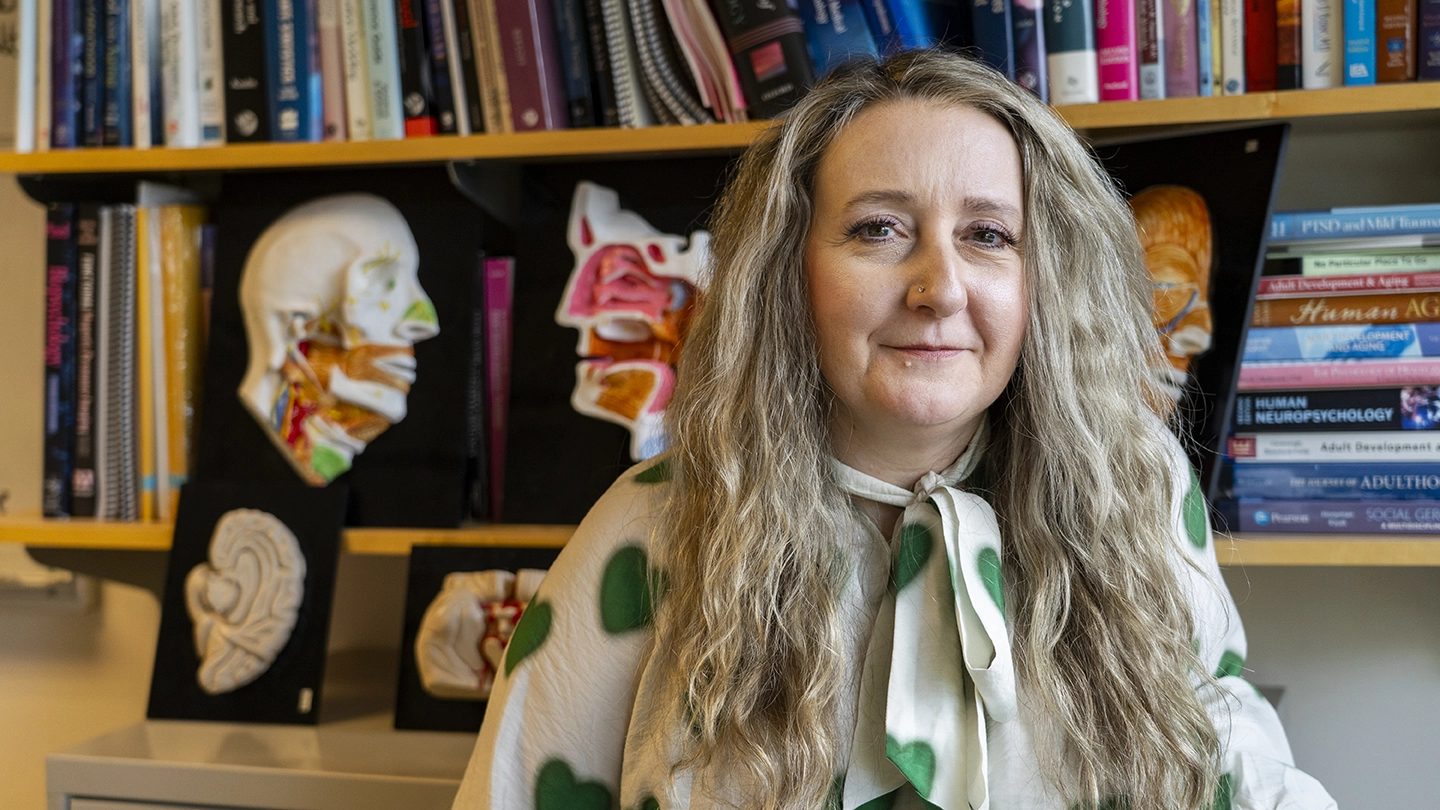
A new digital resource co-created by University of Victoria (UVic) researchers and trauma survivors will streamline access to resources and tools for clinicians who support people with complex post-traumatic stress at Island Health and in other jurisdictions.
To enhance trauma-informed health care for people experiencing complex post-traumatic stress disorder (C-PTSD), an online site has been built to provide the information and tools professionals need to respond to emerging patient care needs. Using multimedia including videos, handouts and quizzes, the tool provides information on C-PTSD, how it affects people mentally and physically, and how to provide trauma-informed care.
Colette Smart, UVic psychologist and Island Health research scholar in residence for mental health and substance use, co-developed the digital tool to help educate health-care providers about the unique needs of individuals who have C-PTSD, particularly within the context of close relationships, which is referred to as complex relational trauma.
Most people are familiar with classic PTSD, which results typically from a singular, isolated event. Fewer people are aware of C-PTSD, which arises when trauma is prolonged, repeated and inescapable, and is more common than people realize.
“Survivors of C-PTSD often experience long-term mental and physical health challenges, but we know from hearing from them directly that the care they receive could be enhanced through more trauma-informed approaches,” says Smart.
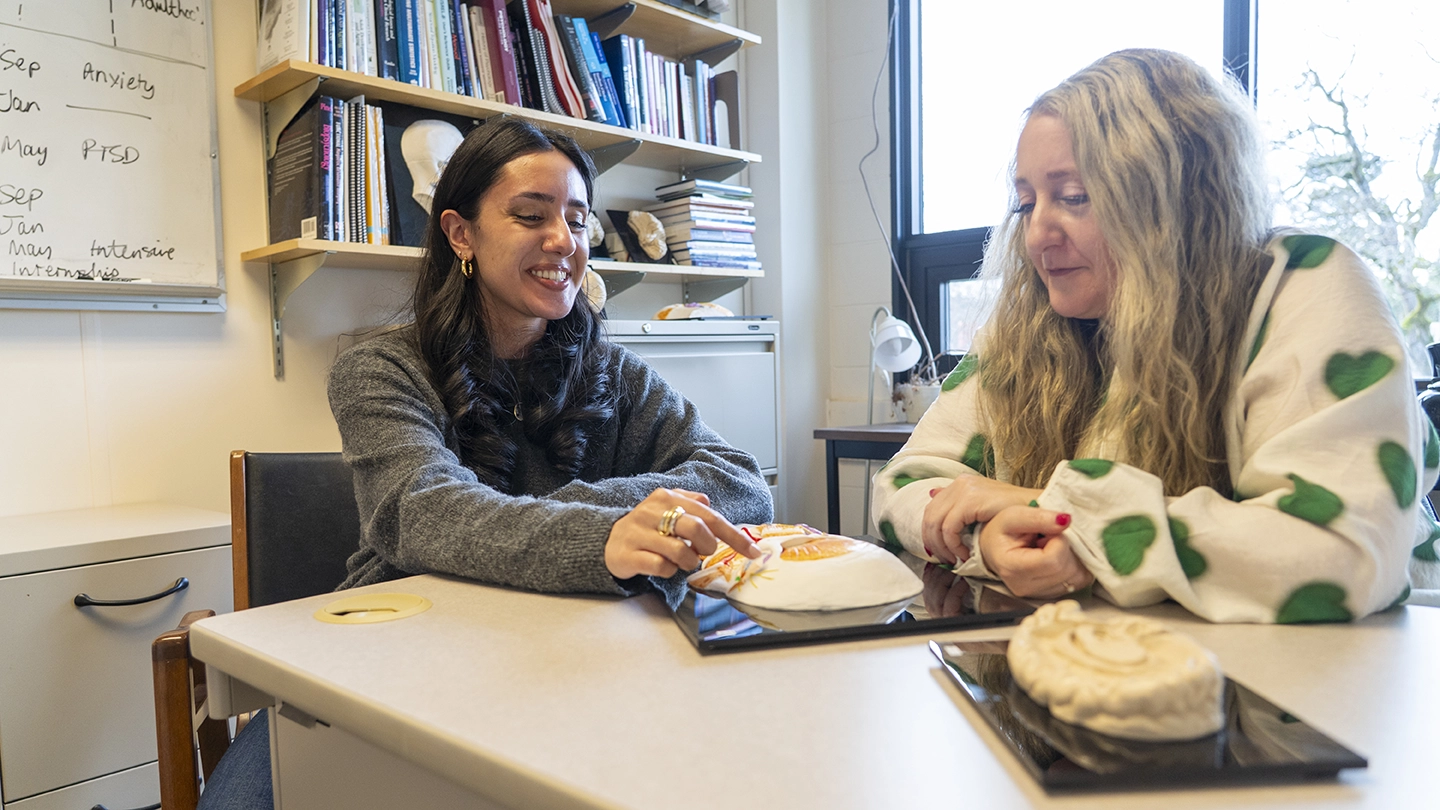
The idea for the tool originated with Lori Herod, a retired professor of adult education, complex relational trauma survivor and founder of Out of the Storm, an online educational platform and community with 14,000 members from more than 87 countries. From the site’s inception in 2014, survivors have expressed they struggled to find mental and physical health-care providers who understood effective C-PTSD treatment.
“Daily living can be very difficult. A lot of us put a mask on, but many can’t even do that. You see that in homelessness, addiction. C-PTSD is definitely a public health issue, if not a crisis,” Herod says. “There are a lot of health-care inequities, but I’m hoping survivors come out and tell health-care providers what’s needed. It’s not that the professionals don’t care, it’s that they don’t know.”
Herod understood a guide for health-care professionals and institutions was needed and wanted to ensure it was based on research and the lived experiences of survivors seeking treatment, services and support within health care. During an International Society for Traumatic Stress Studies meeting in 2024, Herod connected with Smart, who could see Herod’s vision for a patient-led resource to support local health-care practitioners. Together they convened a team of clinicians, researchers and survivors, conducted a research study and developed the Complex Relational Trauma and Complex PTSD: Closing the Gap in Healthcare digital resource.
Survivors’ voices were centred at every step of the tool’s development. Not only did this innovative approach align with best practices, the patient-oriented research aligns with needs of survivors who were seeking the changes themselves.
Smart co-created the resource as part of her work with the Island Health Research Scholar in Residence Program, funded by Island Health, which supports research, enables knowledge translation, establishes partnerships and secures funding to support adults with lived experience of serious and persistent mental illness.
“As a learning organization, Island Health is committed to improving knowledge, information and tools that help our clinical care teams strengthen effective, empathic and outcome-oriented care to the patients we serve,” said Dr. Nelson Collins, South Island Division Head, Mental Health and Substance Use, Island Health. “Partnerships and collaboration with educational institutions for research are instrumental in advancing how frontline care is delivered.”
The Complex Relational Trauma and Complex PTSD: Closing the Gap in Healthcare digital resource is available online and is being rolled out to Island Health primary care networks. So far, the resource has been disseminated to 47 institutions and professional associations in BC, Canada and the United States, and Smart and Herod are investigating options for promotion in health sectors and beyond.
About Island Health
Island Health provides health and care services to more than 933,000 people across Vancouver Island, the islands in the Salish Sea and Johnstone Strait, and mainland communities north of Powell River. Our team includes more than 32,500 health care professionals, including nearly 3,200 doctors, nurse practitioners, midwives and dentists who make up our Medical Staff. We are also supported by more than 1,500 adult and youth volunteers who contribute more than 70,000 hours of service annually, as well as 12 foundations and 19 active auxiliaries. Together, we deliver a wide range of health services across a large and geographically diverse region — including public health, primary care, home and community care, mental health and substance use services, acute hospital care and much more.
link