Wildfire Smoke Is Obvious, Its Long-Term Health Impacts Are Not

The Intersection of Pregnancy and Wildfire Pollution
When Lena Sharara was studying for her Master of Public Health at Tufts University School of Medicine through the accelerated Bachelor-Master of Public Health program, she wrote a narrative review, Wildfires and Pregnancy Outcomes. Sharara, A24, MG25 (MPH), associated wildfire smoke exposure with pregnancy complications to create a review that paves the way for “more precise, equitable, and justice-oriented public health responses to wildfire smoke exposure in pregnancy.”
Sharara developed an interest in how wildfire smoke poses a public health threat, specifically to pregnant people, while she worked as a research assistant at the Maternal Outcomes for Translational Health Equity Research (MOTHER) Lab at the Center for Black Maternal Health and Reproductive Justice at the School of Medicine. As part of her role, Sharara served as the co-chair of the Lab’s Community Engagement, Advocacy and Policy (CEAP) initiative, as well as one of the hosts of the MOTHER Lab podcast.
It was during an episode of the podcast that Sharara first learned about the risks associated with air quality and maternal and fetal outcomes.
“A Howard University researcher found a lack of air quality monitoring in marginalized communities and noted the impact that can have on quality of life,” Sharara said. “There’s an area of data that’s completely missing. I had that in the back of my mind as I considered my own research.”
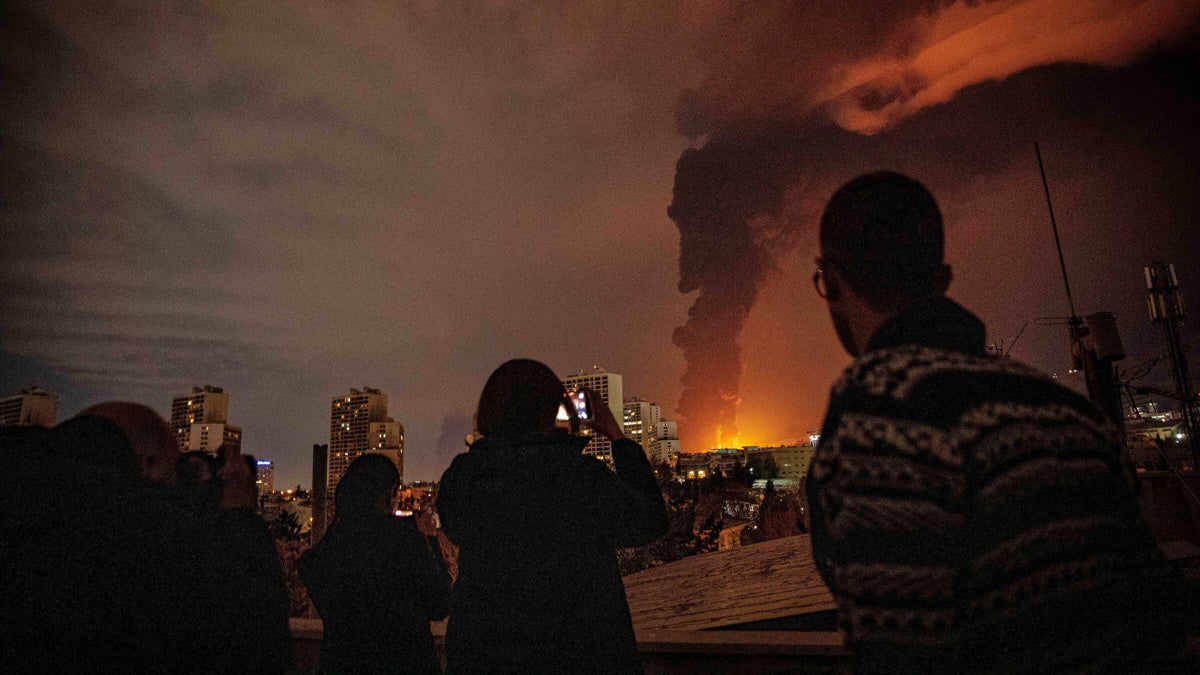
Soon after that conversation, the 2024 Southern California wildfires gripped the nation and dominated headlines, with fires in the Palisades and Eaton neighborhoods burning more than 35,000 acres, fueled by drought and strong, dry Santa Ana winds.
“Those fires were a big topic in a lot of my classes, and I realized that although there is a little bit of data that’s been collected on wildfires and pregnancy outcomes, I wondered what might have been collected about marginalized communities and low-income communities,” Sharara reflected. “If these communities don’t have ways to monitor air quality, then there’s probably a significant number of people, pregnant and otherwise, who are affected by wildfire smoke who don’t even know it.”
Sharara’s paper calls for an increase in air quality monitoring in rural areas and communities of color, specifically with ground-level monitoring that provides real-time readings of fine particulate matter levels, since these areas historically have been found to have fewer air quality monitoring stations.
“It’s important for researchers in the field to consider collecting this data accurately so that as wildfires continue to happen, we have ways to protect all communities,” Sharara shared.
link