


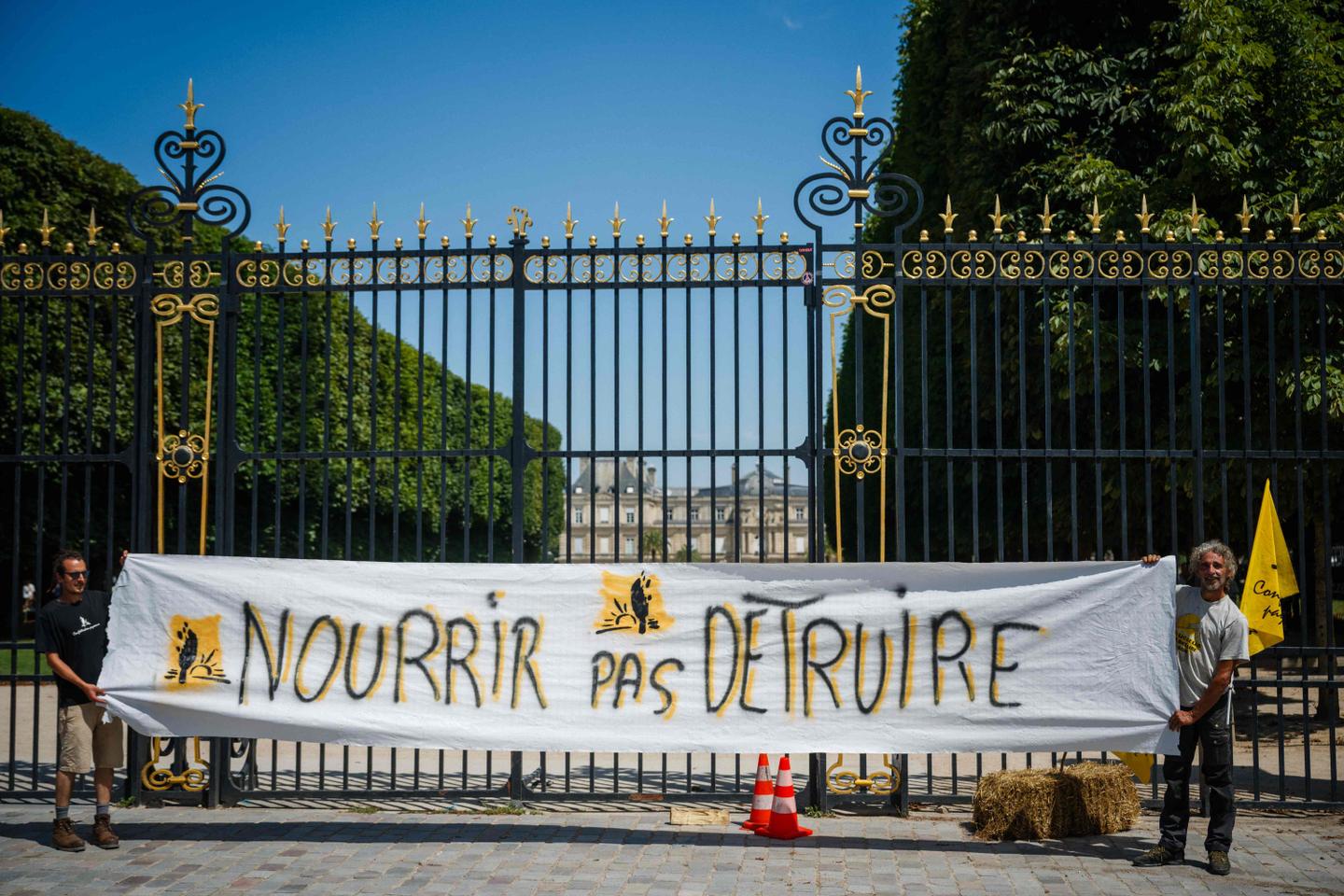
The Constitutional Council did not need to resort to convoluted legal reasoning to put an end, on Thursday, August 7, to the most heated political controversy in France this summer. By introducing, through the Duplomb Law passed on July 8, an exception to the ban on neonicotinoids – pesticides banned in France since 2018 – without any time limit or restrictions on use, the Parliament “deprived the right to live in a balanced and healthy environment of legal guarantees.” That right is specifically enshrined in the French Environmental Charter, which was initiated by then persident Jacques Chirac in 2004 and incorporated the following year into the French Constitution.
In ruling the most controversial provision of the Duplomb Law, “aimed at lifting constraints on the profession of farming,” unconstitutional, the nine judges of the Constitutional Council held that the exception granted by this bill covers “all agricultural sectors” for an indefinite period. It doesn’t matter whether or not they are threatened by pests, even though the products in question “have an impact on biodiversity (…) and create risks for human health.”
In 2020, the same judges gave the green light to limited exemptions allowing the use of neonicotinoids for a set period and only on beets. But this time, they judged that lawmakers, by rejecting all oversight in reauthorizing potentially dangerous products, had overstepped the boundaries of the Constitution.

Clear and explicitly motivated by public health data and the current state of the law, the decision legally resolved a debate in which scientific findings had been pushed aside by a coalition of economic, corporate and political interests, uniting advocates of intensive agriculture, the right and far right, all in the name of competitiveness. With this landmark decision, the Constitutional Council affirmed the constitutional value of environmental protection and established itself as a protector of the right to a healthy environment. While maintaining the margin for discretion used in 2020, the body signaled to lawmakers that they cannot act without safeguards when it comes to the health of the French people.
The blocking of the most contested provision of the Duplomb Law marked a clear victory for the 2.1 million signatories of the petition calling for its repeal. However, this success, shared by the left who backed the petition, could paradoxically deprive the left of a rallying cause for the fall parliamentary session, while offering relief to the president. Had the bill been approved, the president would have faced the dilemma of signing it into law, meaning a choice between farmers supporting the Duplomb Law and the petition’s signatories demanding its repeal.
For Prime Minister François Bayrou’s government, itself divided over a bill described by some as a scientific aberration and by others as a response to the 2024 farmers’ protest movement, the Constitutional Council’s ruling should theoretically close the debate. The vigor with which the government chooses to defend the logical and balanced decision of the guardians of the Constitution against those on the right and far right who never fail to pit the “people” against the judges will speak volumes about the rule of law in France.
link